Week 2 · The Exit Season · Letting Go
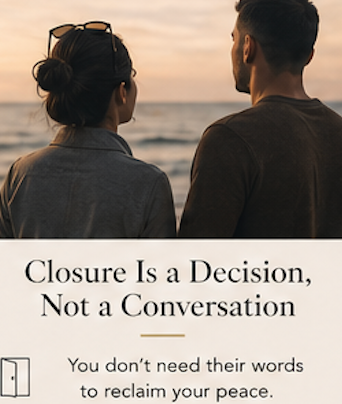
I used to think that if I could just get him on the phone — really talk, really make him understand what he’d done — I’d finally feel free.
I was wrong. And learning that cost me an entire wedding day.
The Day I Was The Maid of Honour

It was December.
My best friend was getting married. And I was her maid of honour — the one who was supposed to be fully present, fully hers, on the biggest day of her life. I’d been at the salon since morning, getting my hair done, sending him the restaurant address, telling him what the night meant to me.
“I’m the maid of honour this time. I want you there. Hope you can understand.”
He replied: “Nice hair style. I understand you. But been rushed here. I will do my best.”
I held onto that. I will do my best. I carried it through the ceremony, through the photographs, through every moment I was supposed to be smiling and present. I kept my phone face-down. I kept checking it anyway.
By 4pm, I asked where he was. “I am still helping Ryan. Sorry far away from phone.”
I typed back one word: Ok.
Not because I was okay. But because I was standing at my best friend’s wedding in a bridesmaids dress, and I had a choice — fall apart, or hold it together. I chose to hold it together. I smiled. I laughed. I did everything a maid of honour is supposed to do, while something in me was quietly going cold.
He had known about this wedding for months. He had the date for weeks. The house move only came up one or two days before — and he chose it anyway. That detail matters. This wasn’t a clash of two things that accidentally landed on the same day. This was a choice, made at the last minute, after a long-standing promise. He just didn’t tell me that’s what he was doing.
Then the photo came through.
I’d sent a picture of the chair full of gifts and bags. The seat that had been reserved for him — now being used to hold bags and gifts. I said: “Your seat :)”
And then he replied: “I am happy my seat been used for good stuff.”
I stared at that message. He had turned his absence into a joke.
I felt the anger rise — clean and sharp and clarifying. Not the messy, desperate anger of someone still hoping. The quiet, settled anger of someone who finally sees.
The Call I Was Waiting For
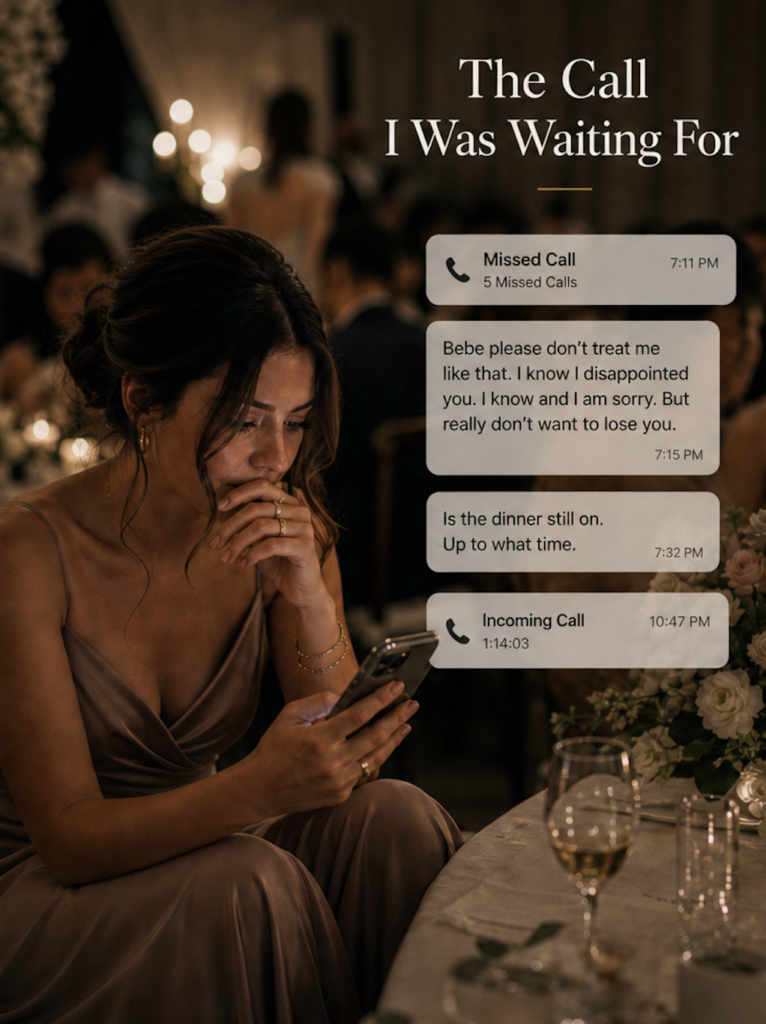
After the ceremony ended, my phone lit up. Missed calls. Then the flood of messages — “Bebe please don’t treat me like that. I know I disappointed you. I know and I am sorry. But really don’t want to lose you.” Then, at 7:32pm: “Is the dinner still on. Up to what time.”
Now he wanted to come.
We had the long call that night. He apologised…a bit. He sounded helpless — that particular kind of resigned helplessness, like he was also somehow a victim of the situation. He hadn’t come to a wedding he promised to attend, using our mutual friends as his reason, and somewhere in that call he made it feel like something that had just happened — rather than something he had chosen.
I had that call. I said everything I needed to say. I told him: it’s done between us.
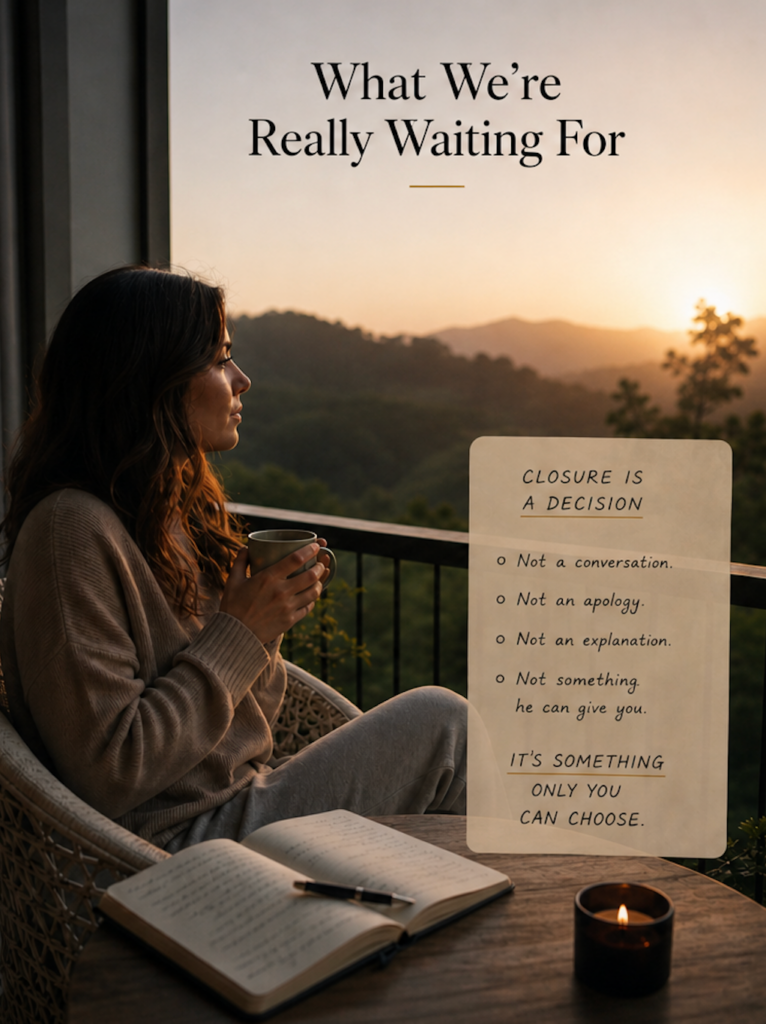
And here’s the truth I need you to hear — the conversation didn’t give me closure. I gave myself closure. The conversation was just the room I was standing in when I finally did it.
What We’re Really Waiting For
If you’re waiting for him to call and finally say the right thing — I understand. I waited for it too. I believed, for a long time, that the right conversation would be the key that unlocked my peace.
But here’s what I know now: the apology you’re waiting for will never be big enough. It cannot be. Because no combination of words can undo what was done, and no explanation can give back what was lost. You can have the conversation a hundred times and still walk away with the same hollow feeling, because closure was never his to give you.
You’ve been waiting for him to hand you something that only you can make.
The woman was waiting for him to pick up the phone. The woman who has rehearsed what she’d say if he ever really listened. The woman who thinks: if I could just make him understand the damage, then I could finally move on — I see you. I was you. And I want to tell you gently but clearly: that conversation will not set you free. It will just be another conversation.
Look at the evidence of your own life. You’ve probably already had versions of it. Did it help? Or did you end up more tangled than before, analysing everything he said, looking for the remorse that matched the scale of the wound?
That’s not closure. That’s a loop.
The Moment I Understood
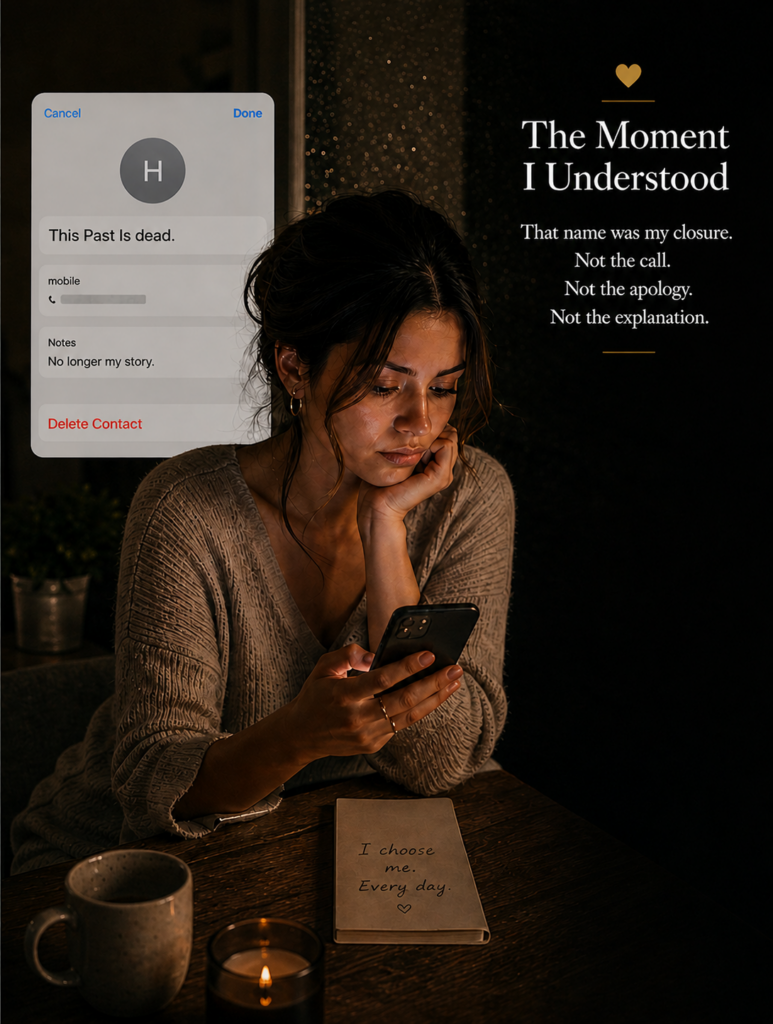
I saved his contact as “This Past Is dead.”
Not in a dramatic moment. Not in rage. I did it quietly, at some point after that night, because I needed to see it every time his name appeared on my screen. A reminder to myself of what this was. A choice I was making, over and over, every time I looked at my phone.
That name was my closure. Not the call. Not the apology. Not the explanation.
The path that opened up after that night didn’t look like healing — not right away. It looked like grief. It looked like anger that still flared up sometimes, like embers you think are out until you step on them. It looked like missing someone I knew wasn’t good for me, which is its own particular kind of exhausting.
But underneath all of that, something had shifted. I had said: it’s done. And I had meant it.
Not because the conversation fixed anything. Because I finally stopped waiting for it to.
The Hard Truth — Named Directly
Closure is an inside job. Full stop.
There is no conversation, no apology, no tearful phone call at 7pm that will do it for you. And the cruelest part? Even when you get the apology — even when he cries, even when he says all the right words — it often still isn’t enough. Because what you actually need isn’t his remorse. It’s your own permission to stop carrying this.
You don’t need him to understand what he did. You need to understand that you deserve to stop explaining it.
He doesn’t have to admit he was wrong for you to know that he was. He doesn’t have to say sorry properly for you to leave properly. He doesn’t have to give you closure for you to take it.

This Week’s Action Step
Write the message you will never send.
Not a composed, dignified letter. The real one. The one where you say exactly how angry you are, exactly what it cost you, exactly what you needed him to understand and never did. Hold nothing back. Swear if you need to. Cry if you need to.
Write it. Read it once. Then close the notebook — or burn the page, or tear it into pieces so small they can’t be reassembled.
That act is not childish. It is not weak. It is you completing a conversation your nervous system has been trying to finish for months, or years, in your own private court — where the verdict was always yours to make.
Sign it. Date it. Close it.
That is your closure.
Before You Go
I want to say something about that wedding day.
My best friend got married. It was her day — beautiful, full, everything she deserved. And I was there, fully, as her maid of honour. I did not collapse. I did not let him steal that from her, or from me.
That mattered. That was also a choice. On a day when I had every reason to fall apart, I chose to show up for someone I loved. Looking back, I think that was the first small proof that I was going to be okay. That I was more than what he had made me feel like in that season.
You are more too. More than the waiting. More than the unanswered calls. More than the conversation that never quite happened the way you needed it to.
You don’t need his words to set you free.
Write your own.

Next week: I Didn’t Want Him. I Wanted to Be Chosen.“The difference between love and validation — and why it matters.”