

Alright fam, real talk for a sec. Don’t scroll away. Gimme three minutes of your time—and nah, this isn’t another product drop or some played-out “sustainability is important” PSA you’ve heard a million times.
I’m here to spill the tea on something raw, something real: what you wear, what you cop, what you hype up… it has real-world consequences you can’t see. No cap. It’s a chain reaction. It’s the market. It’s that pipeline where human desire turns “aesthetics” into “demand.”
Your style choices can change their fate.
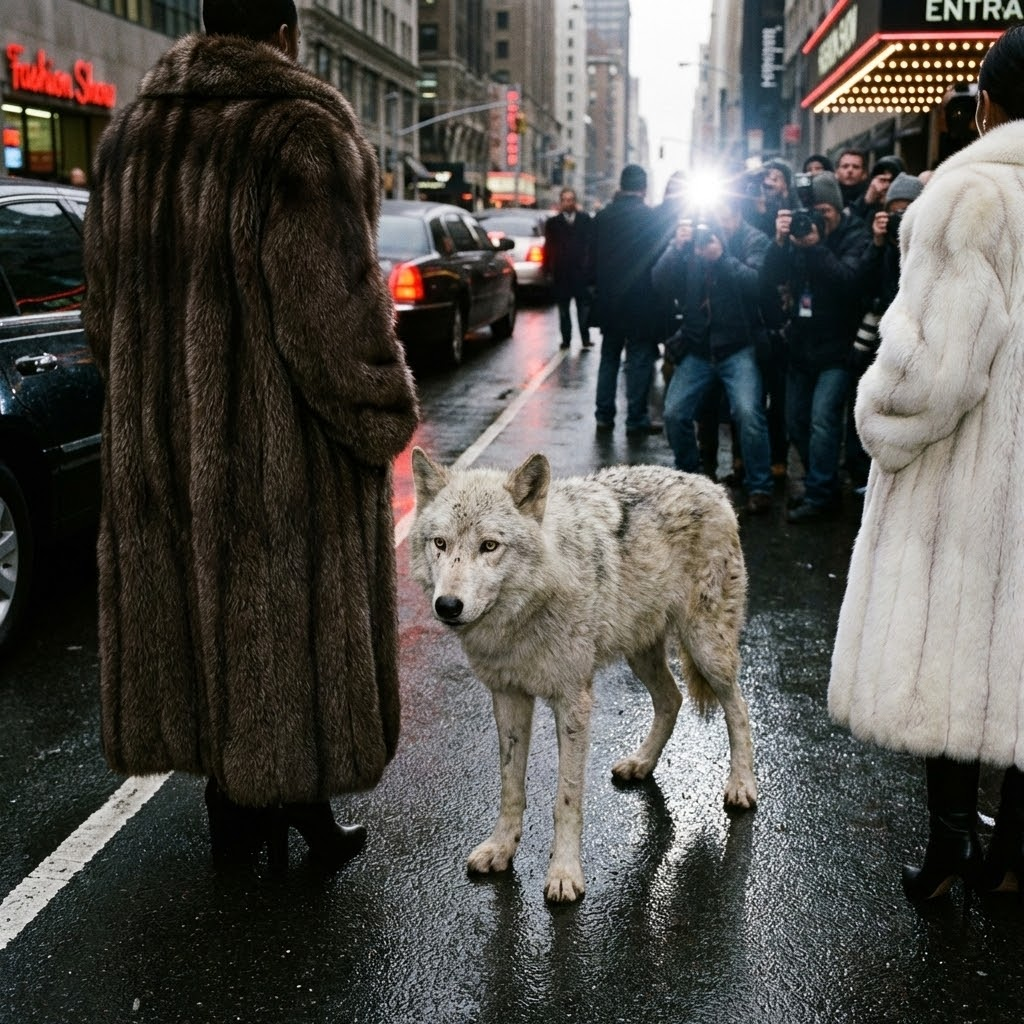
1|Fashion Isn’t Harmless Beauty, It’s an Amplified Choice
Live in NYC long enough, and you get it: this city is a master at turning everything into a vibe. A coffee is a vibe, a jacket is a vibe, a whole fashion show is a vibe. We use our fits to make a statement, our ‘fit checks’ to set the day’s energy, and that ‘main character energy’ to build a shell tough enough to get us through the day.
We forget that “luxury,” “rare,” “exotic,” “noble”—these aren’t inherent aesthetics. They’re desires conditioned into us by the industry, by history, by a culture of consumerism. When a material gets packaged as a “status symbol,” it morphs from an option to a must-have. It shifts from “I like it” to “I need it.”
And then the chain starts moving: The top demands supply, the middle chases profit, the bottom craves clout. And nature? It doesn’t hold press conferences. It doesn’t issue statements. It just… silently disappears.
2|Poaching Steals More Than Fur—It Steals Trust
I’ve always been hit hard by true stories about wildlife, but the one that lives in my head rent-free is about a Chinese painter, Li Weiyi, and the wolf she raised, “Green.”
Li Weiyi rescued a lone wolf cub on the plains and raised him in the city. When Green grew into a full wolf, the question became: where does he belong? The easy, “responsible” way out was a zoo. A safe cage, guaranteed food, but he’d lose his freedom forever. He’d never be a real wolf.
But Li Weiyi chose a path almost no one could understand. She believed Green’s true destiny was in the wild, with a pack. She wanted him to run free, to find his own kind, to have a wolf’s life—not to become a spectacle for humans.
To make this insane hope a reality, she made a jaw-dropping decision: she sold her house, bought an RV, and drove Green back to the grasslands to teach him, from scratch, how to be a wild wolf again.
That’s not the logic of a pet owner. That’s the selflessness of a mother’s love. She gave up everything, not to keep him by her side, but to teach him how to leave her forever and return to the dangerous, beautiful world that was rightfully his.
This story completely shatters the cold logic of poaching. Poaching turns animals into objects, into pelts and prices. Li Weiyi’s choice sees an animal as a “him,” an individual with a destiny, whose freedom was more important than her own stability.
The most terrifying part of poaching isn’t just killing one animal. It’s the long-term ecological fallout: teaching a species to equate humans with danger. When fear becomes experience, experience becomes collective memory, and memory becomes instinct—that’s generations of an animal’s existence, rewritten by us.
That’s why I can’t look at luxury built on animal scarcity as harmless fashion anymore. It’s not just about the material; it’s a worldview that sees nature as a resource library for human ego and display. Li Weiyi’s story proves another worldview exists: one of stewardship, not conquest.

3|Fashion’s Silent Violence: Packaging Plunder as Aesthetics
We have to admit it: fashion has been, and in some corners still is, obsessed with a “trophy aesthetic.”
The language is always elegant:
- “Exotic”
- “Rare”
- “Heritage luxury”
- “Timeless craftsmanship”
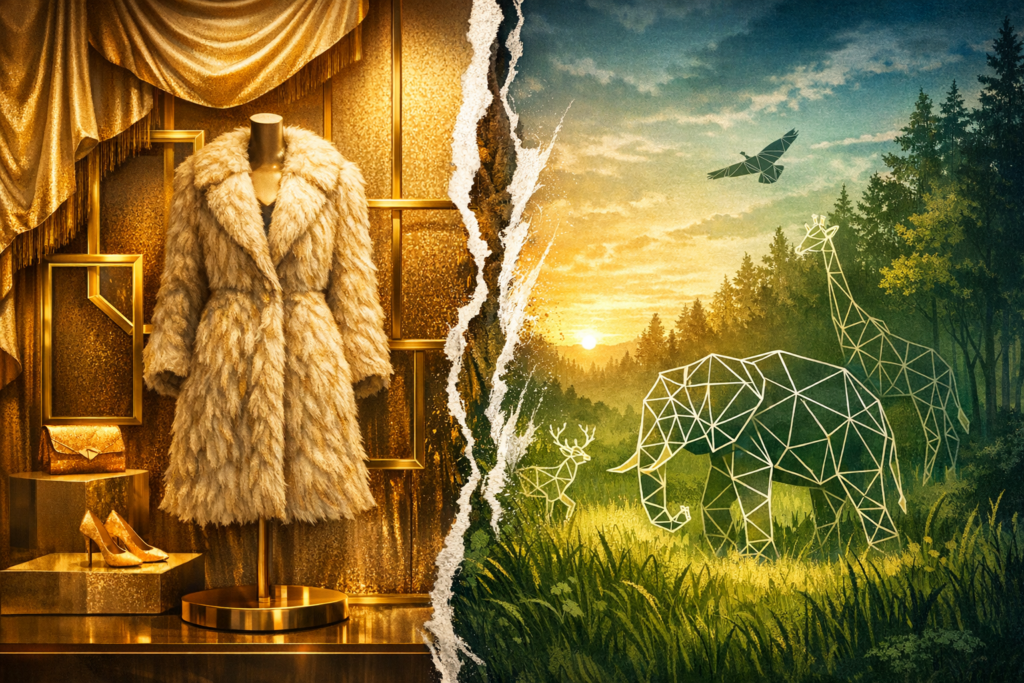
Sounds classy, right? But the reality is often this: using scarcity to inflate prices, using animals to signal status, and trading harm for “high-fashion.”
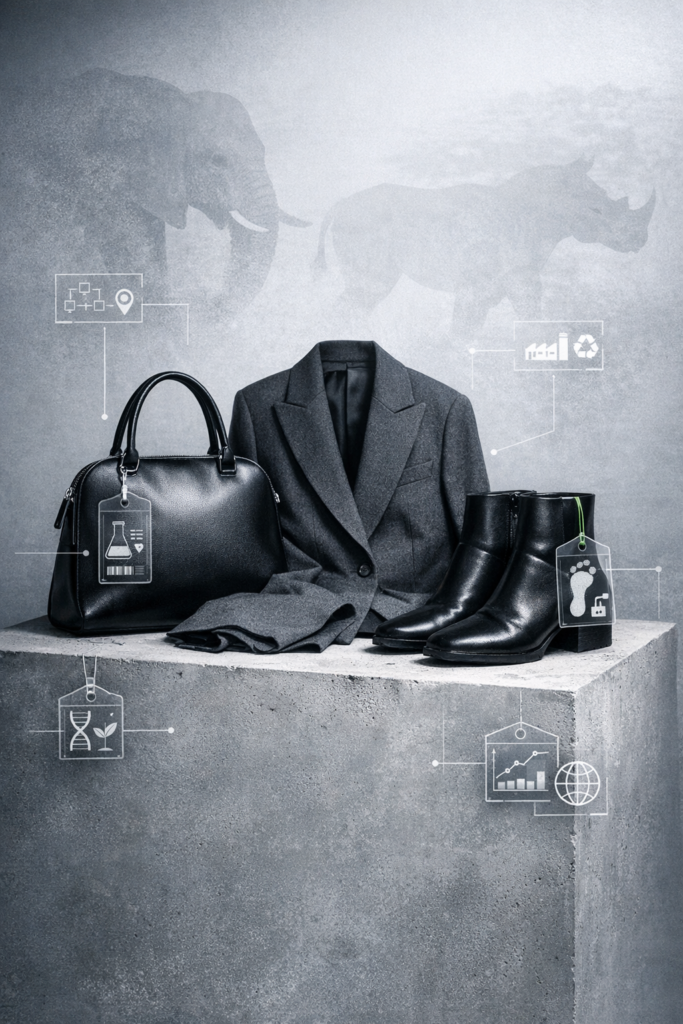
The complex part? Most consumers aren’t “bad people.” We’ve just been conditioned to think this is normal—part of the fast fashion cycle. Just like we were trained to think new arrivals every week are normal, and that your closet is always missing something.
So I’m not here to say “you shouldn’t love looking good.” I’m saying: you absolutely can, but it’s time to decouple your aesthetic from the logic of plunder. It’s time for ethical fashion to be the standard.
4|NYC Gen Z Sustainable Style: It’s Not Austerity, It’s a Stance
I don’t want to frame sustainable fashion as some deprivation checklist. That’s a conversation ender. I see it as a new kind of cool: you can still be a style icon, have an edge, be unapologetically New York, but no living being has to pay the price for your look.
Here are my “Anti-Poaching Style Rules” (feel free to screenshot for your next shopping trip):
Rule A: Reject “Mystery Box” Luxury. If a brand is vague on its material sourcing, supply chain transparency, or animal welfare compliance while hyping up how “luxe,” “rare,” or “limited” it is—sorry, that “mystery” isn’t exclusivity, it’s a red flag.
- My personal baseline: I don’t wear what can’t be traced. A lack of traceability is a breeding ground for gray markets and unethical practices.
Rule B: Make Traceability the New Flex. True luxury isn’t about whether people think your fit looks expensive. It’s knowing your choices can stand up to scrutiny. This is the heart of conscious consumerism.
Start asking the questions:
- What is this material, exactly?
- Is there a certification or a clear standard (e.g., cruelty-free, vegan)?
- Is the sourcing and factory info transparent?
- How long is this piece designed to last? Can it be repaired or tailored?
Traceability is the new flex.
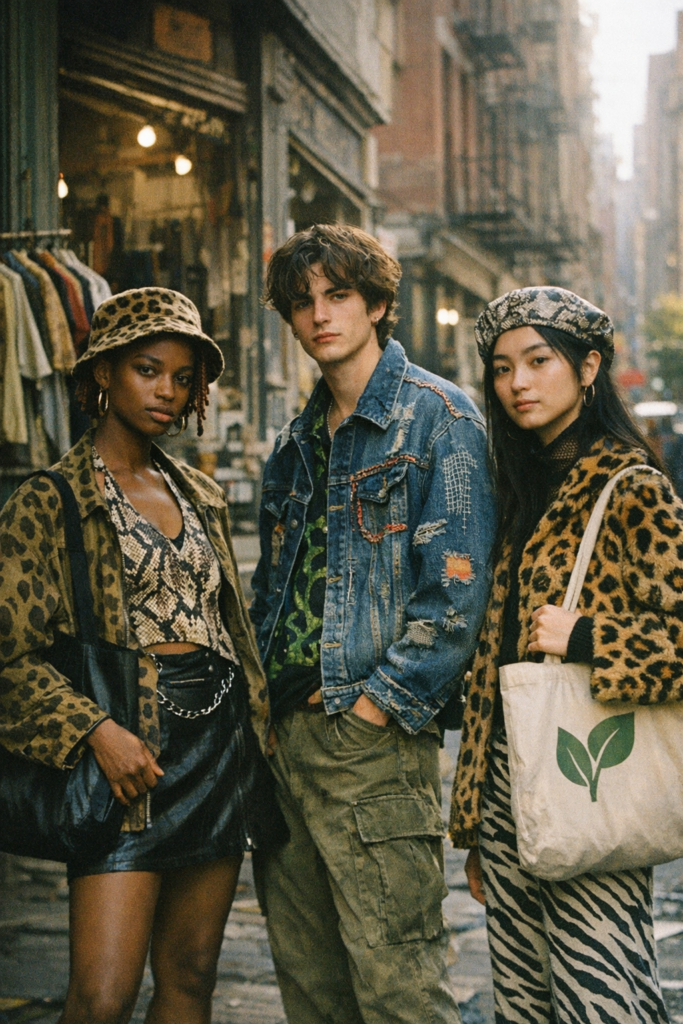
Rule C: Animal Prints Are Iconic, Just Ditch the “Conquest” Narrative. I’m not against animal print. In NYC, snake, tiger, and leopard prints are pure energy. But I’m for treating them as graphic patterns, not a cosplay of “wearing the wild as a trophy.”
The cooler way to do it:
- Choose more graphic, abstracted, or stylized animal prints.
- Look for natural imagery created through jacquard, embossing, or quilting.
- Express “power” through silhouette and tailoring—it’s a much bigger flex than relying on a controversial material.
Rule D: Slow Fashion Isn’t Boring, It’s You Opting Out of Trend-Cycle Manipulation. The documentary-level reality is: overconsumption and the fast fashion industry amplify every single problem. When we get used to weekly drops and monthly style refreshes, the demand for “cheap and fast” gets rewarded, and what’s sacrificed first is always the environment and vulnerable lives.
You don’t have to become a minimalist overnight. Just start making rewearing a core part of your style—the foundation of a killer capsule wardrobe.
- Wear one coat for three seasons until it feels like a part of you.
- Restyle the same piece with different layers, accessories, and shoes.
- Treat mending or alterations as a design detail, not something to hide.
Rewear isn’t a crime. It’s a power move.
5|The Power We Need Isn’t Conquest, It’s Guarding a Boundary
The real strength, like Li Weiyi showed with Green, isn’t about “conquering nature.” It’s the harder kind: to get close, to understand, to take responsibility, and then to personally let it go, back to its own world.
This is a modern and deeply courageous kind of power: It doesn’t see care as weakness or restraint as surrender. In a world that worships possession, choosing not to possess is an act of rebellion.
And fashion can be an extension of that power. We can dress sharp without harming, be bold without plundering, and look luxe without it being built on fear.

6|Last Thing: This Isn’t About Moral Superiority, It’s About Living with Your Eyes Open
If you’ve made it this far, you might be thinking, “So, do I have to be a ‘perfectly ethical consumer’ now?” No.
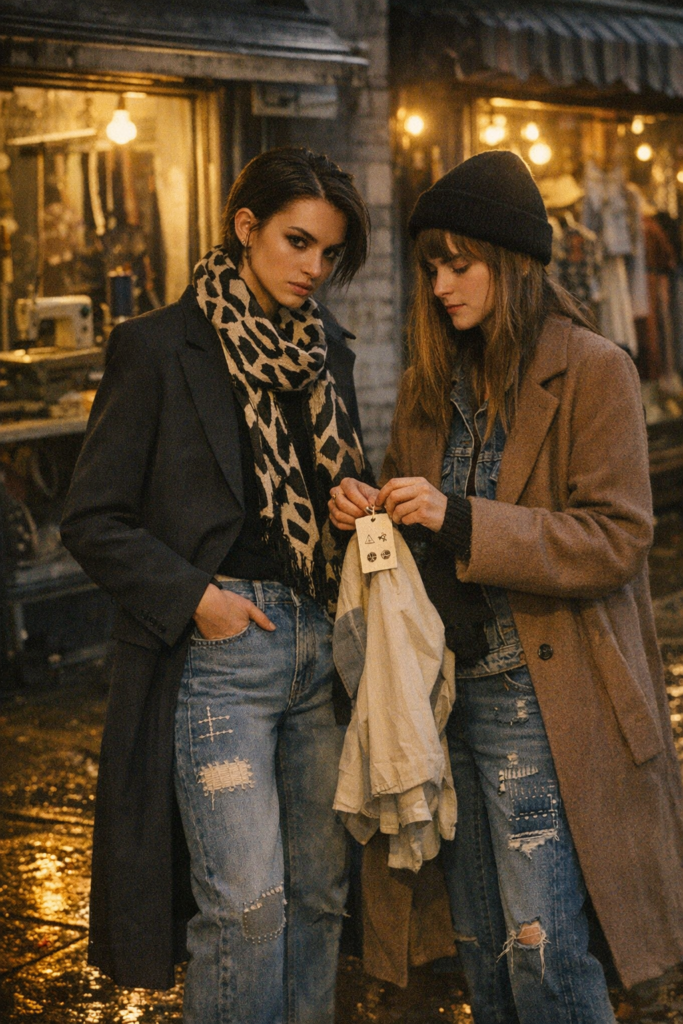
But we can be more conscious. We can upgrade our mindset:
- Level up from “I can afford it” to “I’m willing to invest in a better system.”
- Level up from “I want it” to “Do I truly need it?”
- Level up from “As long as it looks good” to “Looks good and I feel good about it.”
So I’ll leave you with this, for you and for me:
Your style choices can change their fate. We can’t fix the whole world in one go, but every single choice we make helps shape its direction.

The city will stay loud, trends will keep churning, and the runway will keep glowing. But hopefully, the light we wear isn’t stolen from another life.
Bet.