And What It Says About Women Today
Romantic fashion is often misunderstood.
It’s dismissed as delicate, nostalgic, or regressive—something women return to when they want to soften themselves for the world. But the truth is more subversive: romantic fashion keeps returning because women keep reclaiming power on their own terms.
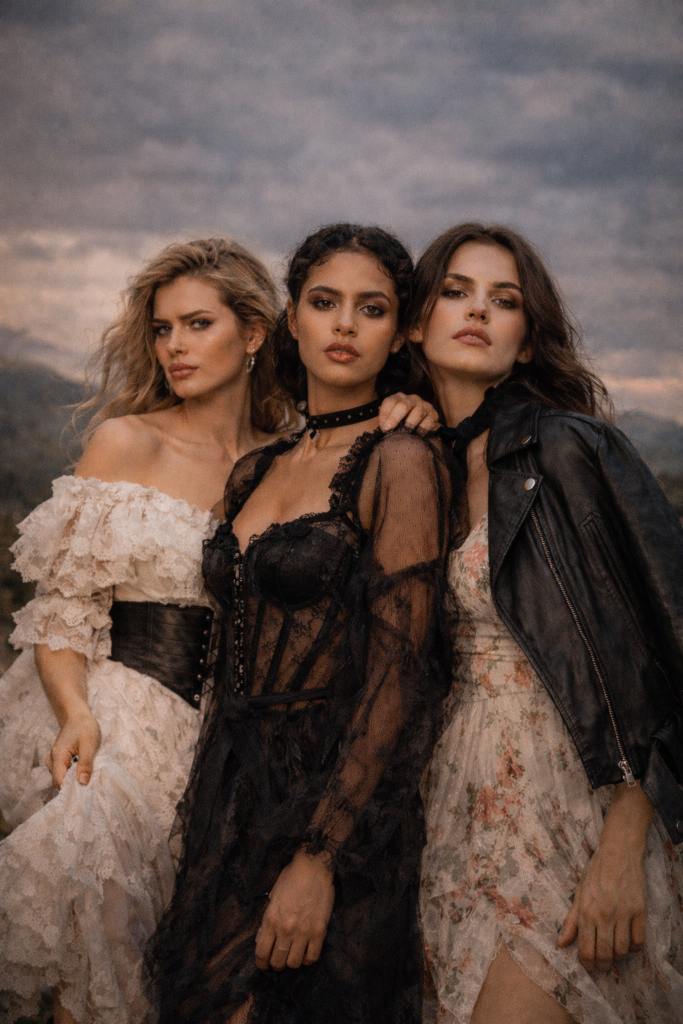
Lace, ruffles, corsets, sheer fabrics, florals, bows—these aren’t symbols of weakness. They are symbols of choice. And choice is one of the most radical forms of independence.
Romantic Fashion as Feminist Expression
Strong feminism doesn’t always look sharp-edged.
For years, women were taught that to be taken seriously, they had to dress “neutral,” “clean,” “tailored.” Femininity was framed as something to dilute. Romantic fashion, in contrast, refuses to be neutral.
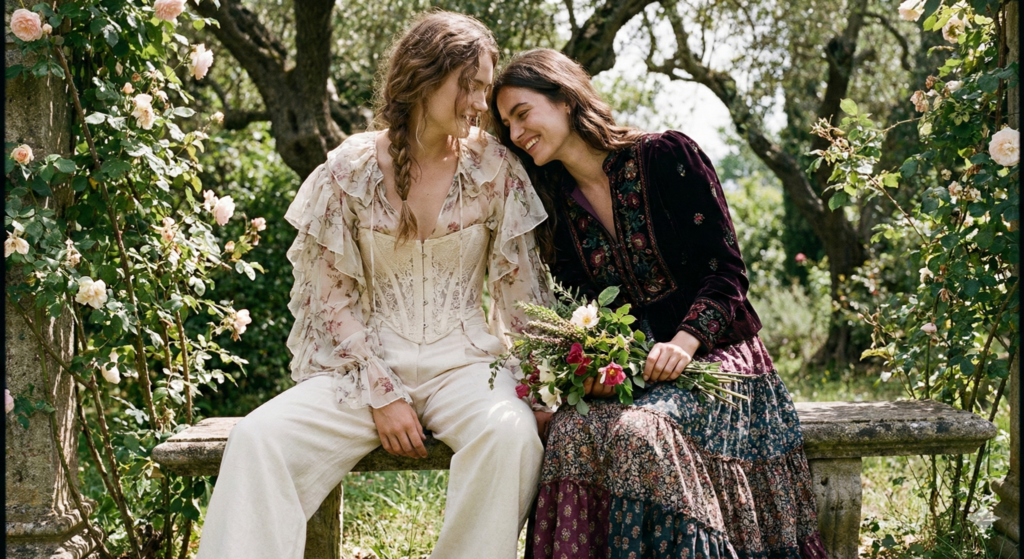
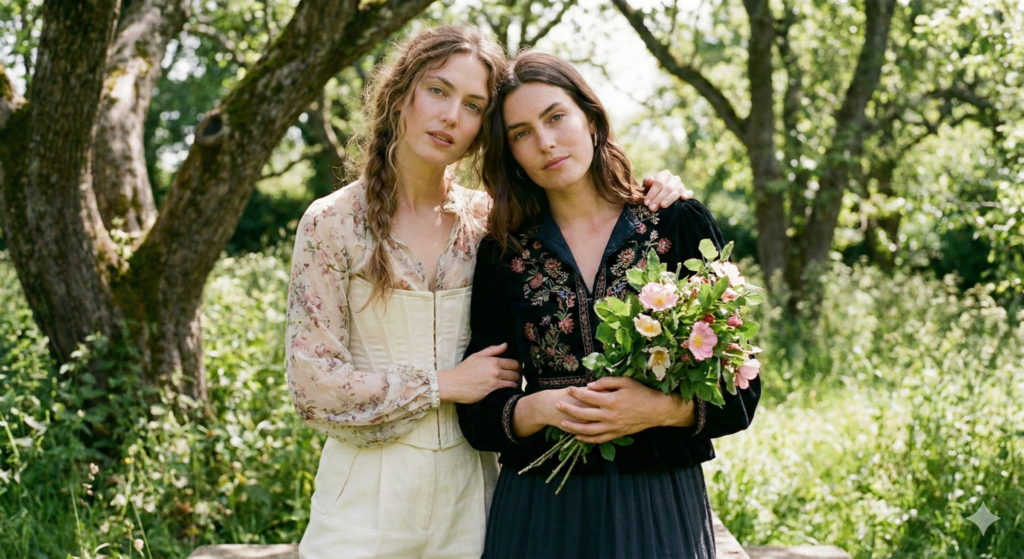
Choosing romantic fashion today is not about submission—it’s about self-definition. It’s a rejection of the idea that power must look masculine, minimal, or restrained. Romantic silhouettes take up space. Ornate details demand attention. Softness becomes intentional, not apologetic.
This is feminism that doesn’t ask permission.
Independence Looks Like Wearing What You Want
Romantic fashion returns in moments when women are tired of being told how to perform strength.
Today’s women are independent, financially aware, emotionally literate, and globally connected. They don’t need their clothes to prove competence. They need their clothes to reflect identity.
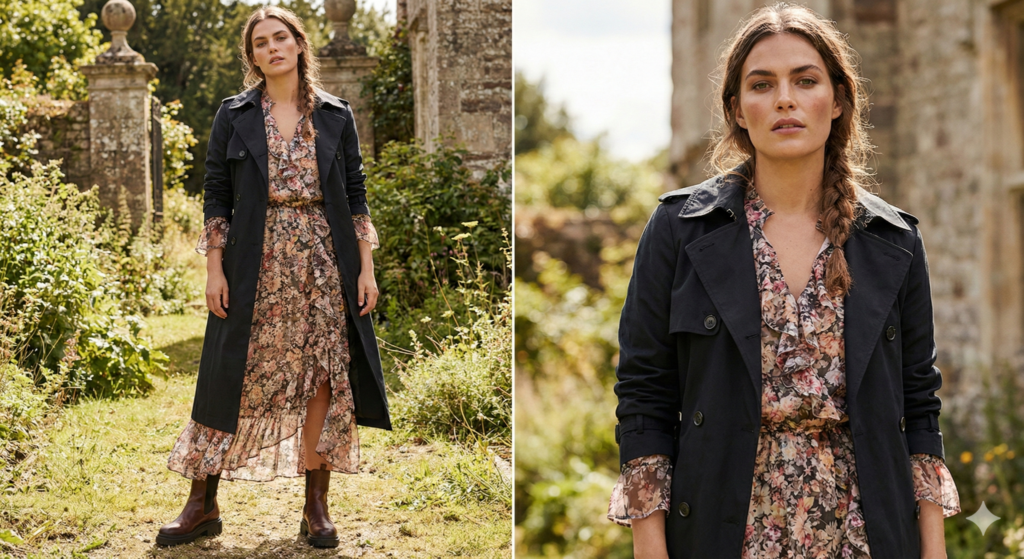
A romantic dress paired with boots. A corset worn without explanation. A sheer blouse styled for the office, not the gaze.
Romantic fashion thrives because independence means freedom of expression, not conformity to another standard.
Softness Is Not the Opposite of Power
One of the most persistent myths feminism is dismantling is the idea that softness equals weakness.
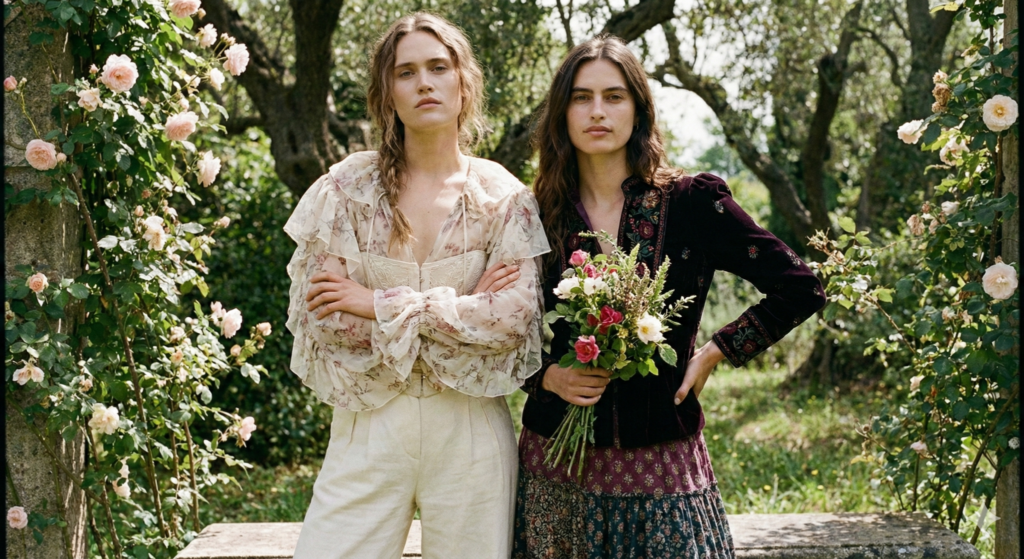
Romantic fashion challenges this directly. It embraces emotion, intuition, beauty, and vulnerability—traits historically undervalued in systems built by and for male dominance. By choosing romance, women are not retreating; they are reclaiming.
There is power in choosing beauty for yourself.
There is power in refusing emotional armor.
There is power in softness that is self-directed.
Romantic fashion doesn’t erase strength—it redefines it.
Romantic Fashion in a Burnout Culture
The return of romantic fashion also reflects emotional reality.
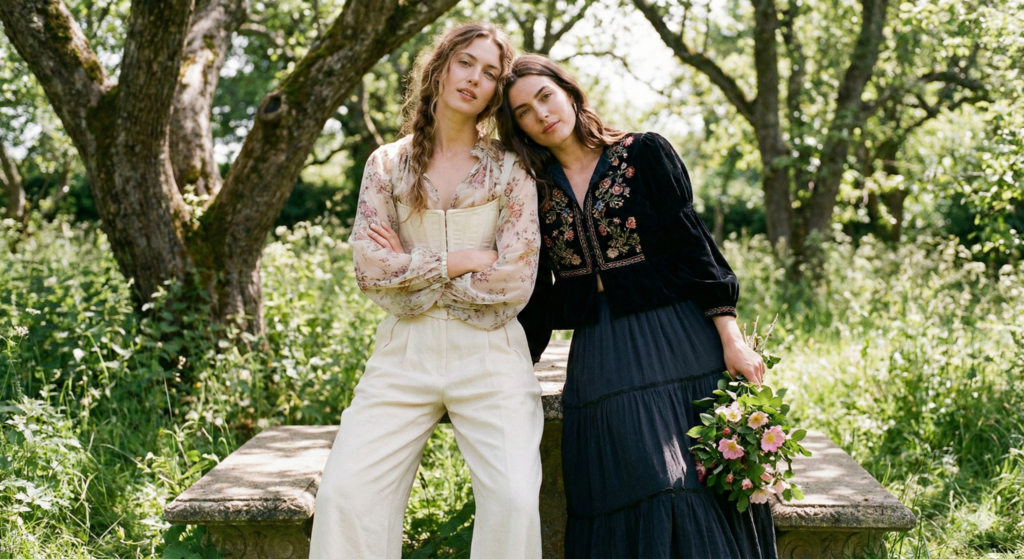
Women today are navigating burnout, over-performance, and constant visibility. Romantic fashion offers a counter-language. It slows the pace. It prioritizes feeling over function, presence over productivity.
In a world that demands constant output, romantic fashion says:
I exist beyond utility.
This isn’t escapism. It’s resistance.
What Romantic Fashion Says About Women Today
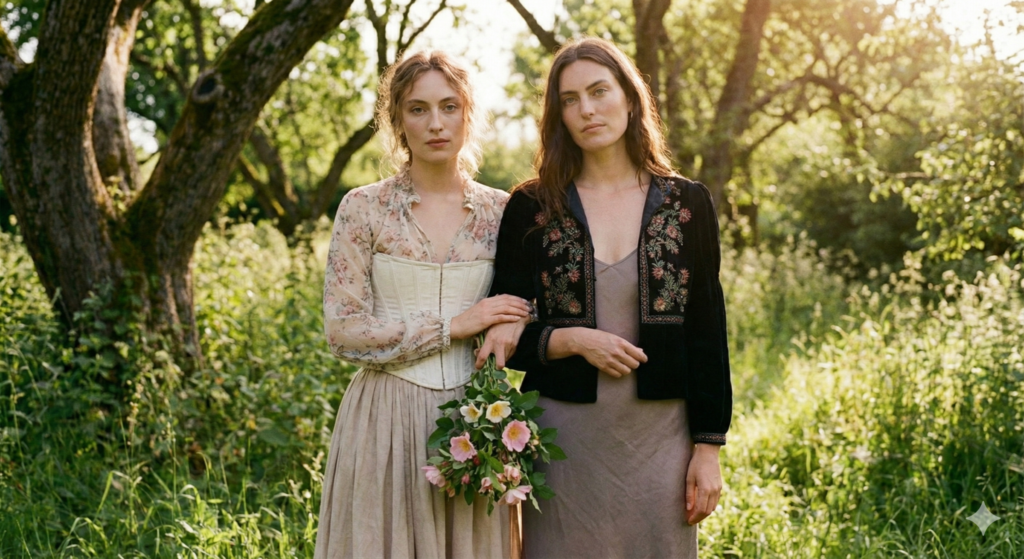
Romantic fashion keeps returning because women are no longer interested in shrinking themselves to be understood.
They want to be complex.
They want to be soft and decisive.
Romantic and rational.
Elegant and uncontainable.
Strong feminism today isn’t about rejecting femininity—it’s about owning it without compromise.
Romantic fashion survives every trend cycle because it adapts to women who refuse to be simplified.
And that may be its most radical quality of all.
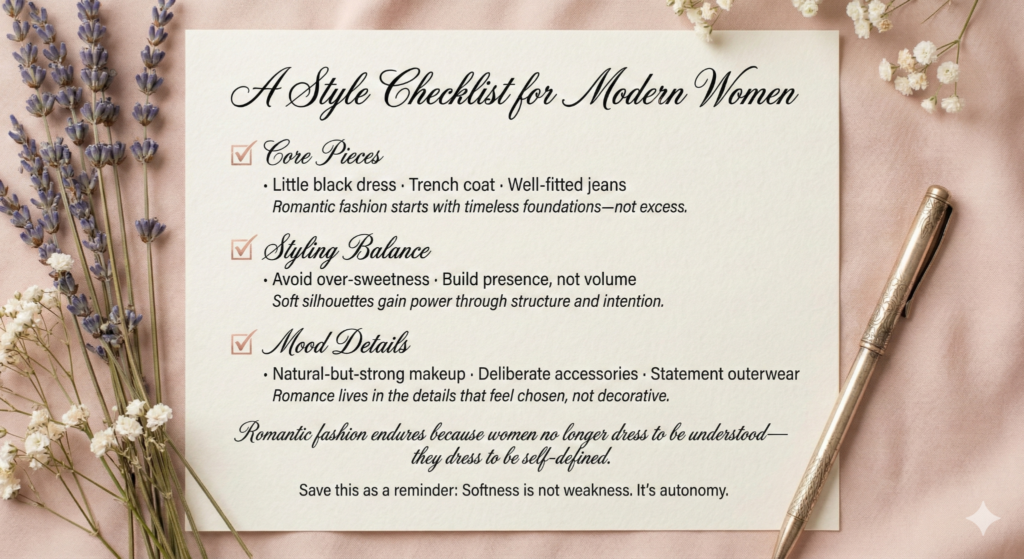
A Style Checklist for Modern Women, Try it now!
✔ Core Pieces
Little black dress · Trench coat · Well-fitted jeans
Romantic fashion starts with timeless foundations—not excess.
✔ Styling Balance
Avoid over-sweetness · Build presence, not volume
Soft silhouettes gain power through structure and intention.
✔ Mood Details
Natural-but-strong makeup · Deliberate accessories · Statement outerwear
Romance lives in the details that feel chosen, not decorative.
Romantic fashion endures because women no longer dress to be understood—
they dress to be self-defined.
Save this as a reminder:
Softness is not weakness. It’s autonomy.